
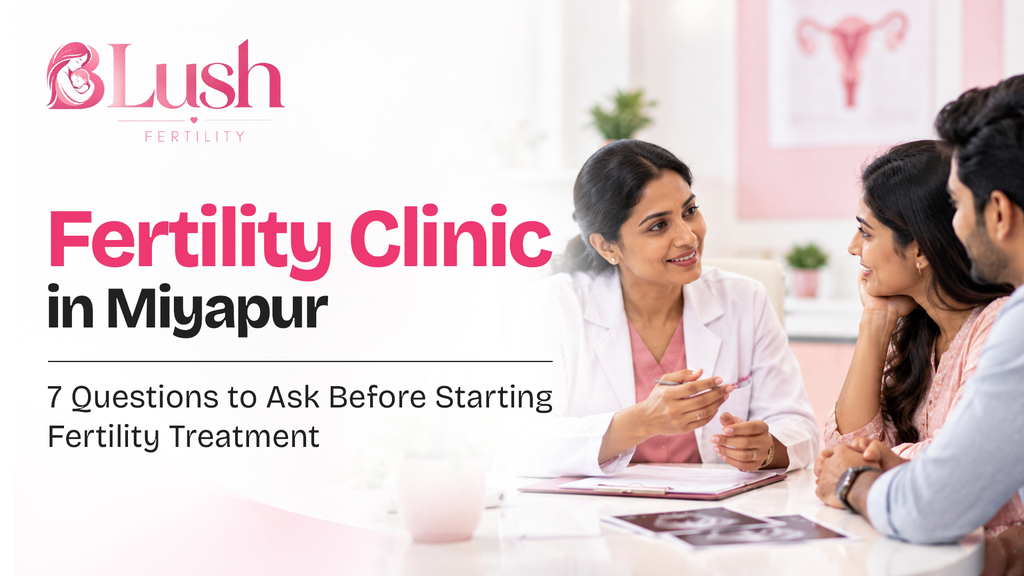
Deciding to see a fertility specialist is a big step. For many couples, it comes after months or even years of waiting, hoping and wondering what is going wrong. Once you decide to seek help, the next challenge is choosing the right fertility clinic in Miyapur for your needs. With so many options across Hyderabad, it is easy to feel overwhelmed by claims, packages and advice from friends and family.
The good news is that you do not have to choose blindly. Knowing the right questions to ask before starting fertility treatment helps you understand the clinic, the doctors and the road ahead. Here are seven questions every couple should ask at their first consultation.
Why Choosing the Right Fertility Clinic in Miyapur Matters?
Fertility treatment is not a single appointment. It is a journey that may include tests, medicines, scans, procedures and follow-up visits over several months. That means you will be visiting your clinic often, so location, comfort and communication matter just as much as technology.
A fertility clinic in Miyapur that is close to home saves you travel time during treatment cycles, when scans and injections often have to happen on specific days. More importantly, the right clinic gives you clear information, honest guidance and a team that treats you as a person, not a number. The seven questions below will help you judge whether a clinic fits your needs.
1. Who Will Be Treating Me and What Is Their Experience?
Fertility care is a specialised field. Before you begin, ask who your treating doctor will be, how long they have been practising in reproductive medicine and what kinds of cases they usually handle.
It also helps to ask about the wider team. Successful treatment depends on more than one doctor. An embryologist handles eggs, sperm and embryos in the lab, and an andrologist looks after male fertility concerns. At Lush Fertility, for example, the team includes a chief fertility consultant, an andrologist and a senior embryologist working together, so both partners are evaluated properly. You can read more about the doctors and the clinic’s journey since 2016 on the About Us page.
2. Which Tests Will Be Done Before Treatment Starts?
A good clinic never jumps straight into treatment. It starts by finding out why you have not conceived. Ask which tests are recommended for you and your partner, what each test shows and how long the results will take.
A proper assessment usually includes a detailed medical history, hormone tests, an ultrasound scan to check the ovaries and uterus, and a semen analysis for the male partner. Male factors contribute to a large share of infertility cases, so testing should never be limited to the woman.
3. Which Treatment Options Are Available, and Why Are They Right for Me?
Not every couple needs IVF. Some do well with simple, less invasive options, while others need advanced procedures. Ask the doctor to explain every option that suits your situation and why one is recommended over another.
Common options include:
- Ovulation induction and follicular study with timed intercourse, often the first step for women with irregular cycles
- IUI (intrauterine insemination), where prepared sperm is placed inside the uterus around ovulation
- IVF (in vitro fertilisation), where eggs and sperm are combined in the lab and the resulting embryo is transferred to the uterus
- ICSI (intracytoplasmic sperm injection), where a single sperm is injected directly into an egg, commonly advised for male factor infertility
A trustworthy doctor will not push the most expensive option. They will start with what your tests show and explain the reasoning in plain language.
4. How Will My Specific Condition Be Handled?
Every couple’s story is different. If you have been diagnosed with, or suspect, a particular condition, ask how the clinic manages it and how it may affect your treatment plan.
Conditions such as PCOS/PCOD, endometriosis, fibroids, low sperm count or repeated pregnancy loss each need a different approach. Sometimes a small correction, such as managing weight, treating a uterine problem or addressing a male factor, can make a real difference before any assisted procedure is attempted. A clinic that offers both diagnostic and surgical support, such as hysteroscopy or laparoscopy, can handle these issues under one roof.
5. What Are the Realistic Success Rates?
This is the question most couples are afraid to ask, and also one of the most important. Ask the clinic what success rates they see, how they measure them (per cycle, per embryo transfer or per couple) and which factors affect your own chances.
Be cautious if a clinic promises guaranteed results. Success in fertility treatment depends on age, the cause of infertility, egg and sperm quality, embryo quality and overall health. An honest doctor will give you a realistic picture based on your reports, explain what could improve your chances and tell you when another approach may be better.
Also ask about the lab. The quality of the embryology lab plays a big part in IVF outcomes, so find out about air quality standards, equipment and whether the clinic follows national guidelines such as those from ICMR.
6. What Will the Treatment Cost and Are There Any Hidden Charges?
Cost is a genuine concern, and you deserve a clear answer. Ask for a written estimate that explains what is included and what is not. Does the quote cover medicines, scans, lab procedures, embryo freezing and embryo transfer? What happens if a cycle needs to be repeated or cancelled?
Many couples need more than one attempt, so it helps to understand the likely total cost before you begin, not after. Transparent pricing is a good sign of an ethical clinic. If the answers feel vague, ask again or consider a second opinion.
7. What Support Will I Get During the Treatment Journey?
Fertility treatment can be emotionally demanding. There are waiting periods, injections, early-morning scans and results that do not always come as hoped. Ask how the clinic supports you between appointments. Can you reach someone if you have a question about medicines? Who explains your reports? How are follow-ups handled after the pregnancy test, whether positive or negative?
Pay attention to how the team makes you feel during your first visit. Do they listen without rushing? Do they involve both partners? You can also read what other families say about their experience on the Testimonials page. Feeling comfortable and respected will make the whole journey easier.
When Should You Consult a Fertility Specialist?
Many couples wait longer than they need to. As a general guide, it is advisable to see a specialist if you have been trying to conceive for a year without success, or for six months if the woman is above 35. You should not wait that long if you have irregular or absent periods, a history of recurrent miscarriage, known conditions such as endometriosis or PCOS, or any concern about male fertility.
If you are not ready for a baby yet but want to protect your options, ask about fertility preservation methods such as egg, sperm or embryo freezing. Early advice often means more choices later. Keep these questions to ask before starting fertility treatment handy, and write down any of your own so nothing is forgotten at the consultation.
Frequently Asked Questions (FAQs) About the Fertility Clinic in Miyapur
1. How do I choose the right fertility clinic in Miyapur?
Look for a clinic with an experienced team that includes a fertility consultant, an andrologist and an embryologist. It should also offer a full evaluation for both partners, explain your treatment options clearly and give transparent cost estimates. A fertility clinic in Miyapur that follows ICMR guidelines and has a modern IVF lab is a good sign. Visiting the clinic and asking the questions to ask before starting fertility treatment will help you judge how comfortable you feel with the team.
2. When should I see a fertility specialist?
You should consult a specialist if you have been trying to conceive for one year without success, or for six months if the woman is above 35. Do not wait that long if you have irregular periods, a history of recurrent miscarriage, or known conditions such as PCOS or endometriosis. You should also go early if there is any concern about male fertility.
3. Which tests are done before starting fertility treatment?
Most clinics begin with a detailed medical history, hormone tests, an ultrasound scan of the ovaries and uterus, and a semen analysis for the male partner. Based on these results, the doctor may suggest further tests and then recommend a treatment plan suited to your situation.
4. Does everyone need IVF to conceive?
No. Many couples do not need IVF. Depending on the cause of infertility, treatment may start with simpler options such as ovulation induction with a follicular study or IUI. IVF or ICSI is usually advised when other options are unlikely to work or when specific problems, such as male factor infertility, are present. Your doctor should explain why a particular treatment is recommended for you.
5. What should I bring to my first fertility consultation?
Bring any previous medical reports, scan results, semen analysis reports and a list of medicines you are taking. It also helps to note down your menstrual cycle details and how long you have been trying to conceive. Ideally, both partners should attend so the doctor gets a complete picture.