
Uterine Fibroids( Leiomyoma or Myoma)
Uterine Fibroids (Leiomyoma or Myoma)
What Are Uterine Fibroids?
Uterine fibroids, also known as leiomyomas or myomas, are non-cancerous growths that develop in or around the uterus. They can vary in size, number, and location. Some women may have fibroids without experiencing any symptoms, while others may experience heavy menstrual bleeding, pelvic pressure, pain, or fertility concerns.
At Lush Fertility, we provide personalized evaluation and management of uterine fibroids based on your symptoms, fibroid size and location, overall health, and reproductive goals.
Uterine Fibroids Symptoms
The symptoms of uterine fibroids can vary from woman to woman. Some fibroids may not cause any noticeable symptoms, while larger or strategically located fibroids may cause discomfort or menstrual and fertility-related concerns.
Common uterine fibroids symptoms include:
- Heavy or prolonged menstrual bleeding
- Painful periods or severe menstrual cramps
- Pelvic pain or pressure
- Lower abdominal discomfort
- Feeling of fullness or heaviness in the abdomen
- Frequent urination
- Difficulty emptying the bladder
- Constipation or pressure in the rectal area
- Lower back pain
- Pain during sexual intercourse
- Abdominal enlargement
- Difficulty conceiving in some cases
If you experience persistent or heavy menstrual bleeding, pelvic pain, or other symptoms, a medical evaluation can help determine whether fibroids may be contributing to your symptoms.
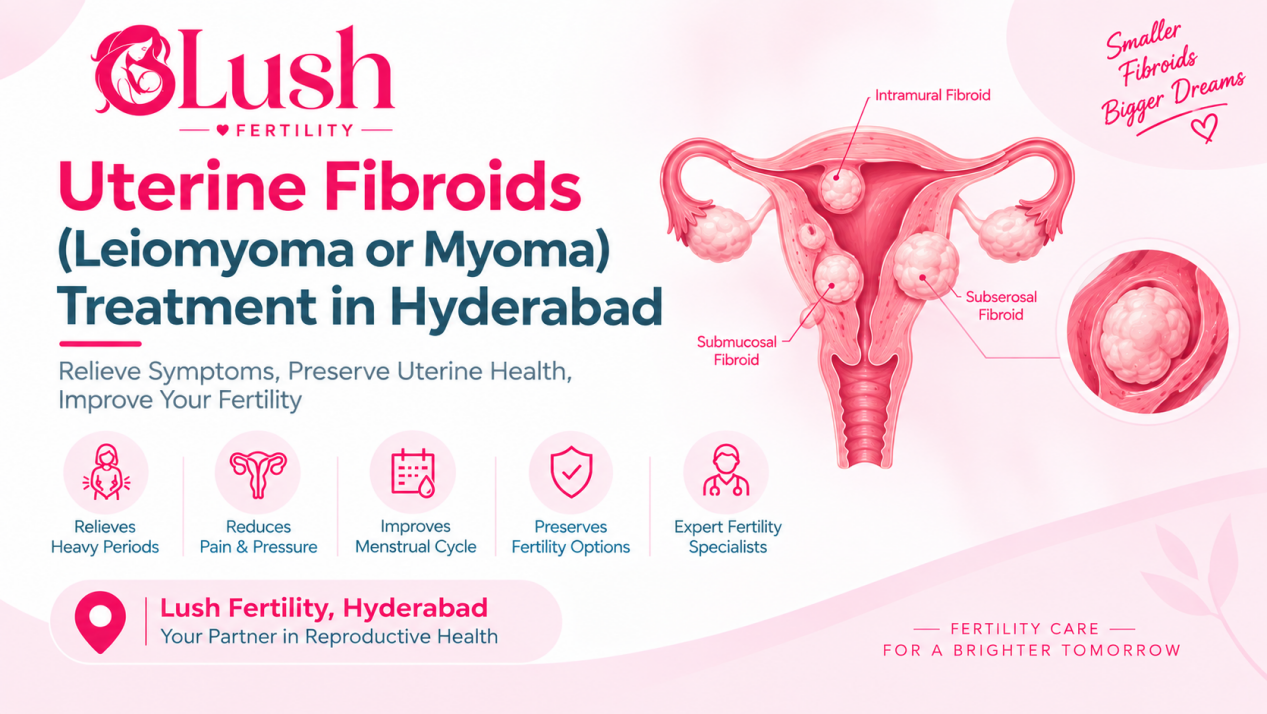
Types of Uterine Fibroids
Fibroids are commonly classified according to their location within or around the uterus.
Submucosal Fibroids
Submucosal fibroids develop beneath the inner lining of the uterus. They may cause heavy menstrual bleeding and can sometimes be associated with fertility problems.
Intramural Fibroids
Intramural fibroids develop within the muscular wall of the uterus. They are one of the most common types of uterine fibroid and may cause heavy periods, pelvic pressure, or abdominal discomfort.
Subserosal Fibroids
Subserosal fibroids grow toward the outer surface of the uterus. Larger fibroids may create pressure on nearby organs and cause symptoms such as frequent urination or constipation.
Pedunculated Fibroids
Pedunculated fibroids develop on a stalk attached to the uterus. They may grow on either the inner or outer surface of the uterus.
What Causes Uterine Fibroids?
The exact cause of uterine fibroids is not completely understood. Hormonal, genetic, and other biological factors may influence their development and growth.
Fibroids can change in size over time, particularly during periods of hormonal changes. Your doctor can assess your individual risk factors and determine the appropriate approach to monitoring or treatment.
How Are Uterine Fibroids Diagnosed?
A diagnosis usually begins with a discussion about your symptoms, menstrual history, medical history, and reproductive goals.
Your doctor may recommend:
- Pelvic examination
- Ultrasound
- Blood tests when required
- Additional imaging tests when necessary
- Fertility evaluation if you are experiencing difficulty conceiving
The number, size, and location of fibroids are important factors when planning fibroid treatment.
Fibroids and Fertility
Fibroids and fertility can be related in some women. The effect of a fibroid on fertility may depend on its size and location, particularly whether it affects the inner cavity of the uterus.
If you are trying to conceive and have been diagnosed with uterine fibroids, a fertility specialist can evaluate your condition and determine whether the fibroids may be affecting conception or pregnancy.
Treatment may not always be necessary. Your fertility specialist will consider your reproductive plans and overall health before recommending any intervention.
Uterine Fibroids and Pregnancy
Many women with fibroids can become pregnant. However, certain fibroids may affect conception or pregnancy depending on their size and location.
If you have uterine fibroids and pregnancy is part of your future plans, it is important to discuss your condition with a fertility specialist. An appropriate evaluation can help determine whether monitoring or treatment may be recommended before pregnancy.
Uterine Fibroid Treatment
Not every woman with fibroids requires treatment. The appropriate uterine fibroid treatment depends on factors such as:
- Severity of symptoms
- Size and location of fibroids
- Number of fibroids
- Age and overall health
- Fertility and pregnancy plans
- Previous treatments
Depending on your individual needs, management may include:
Monitoring
Small or symptom-free fibroids may sometimes be monitored through regular medical check-ups and imaging.
Medication
Certain medications may be recommended to help manage symptoms such as heavy menstrual bleeding or pelvic discomfort.
Minimally Invasive Procedures
Depending on the type and location of the fibroid, minimally invasive procedures may be considered.
Surgical Treatment
Surgical options may be considered when fibroids cause significant symptoms, affect fertility, or require removal based on the individual’s medical needs.
Fertility-Preserving Options
For women who wish to become pregnant, treatment planning may focus on preserving reproductive potential whenever medically appropriate.
Your doctor will explain the available fibroid treatment options and recommend an approach based on your individual condition.
When Should You See a Fertility Specialist?
Consider consulting a fertility specialist if you have:
- Heavy or prolonged menstrual periods
- Persistent pelvic pain or pressure
- A known diagnosis of uterine fibroids
- Difficulty getting pregnant
- Recurrent pregnancy loss
- Fibroids identified during a fertility evaluation
- Concerns about fibroids and a future pregnancy
Early evaluation can help you understand how fibroids may affect your reproductive health and what management options may be appropriate.
Why Choose Lush Fertility for Fibroid Care?
At Lush Fertility, we understand that every woman’s experience with fibroids is different. Our approach focuses on evaluating your symptoms, understanding the characteristics of your fibroids, and considering your fertility and pregnancy goals.
Whether you need monitoring, symptom management, fertility evaluation, or uterine fibroid treatment, our team can help you understand your condition and available options.
Frequently Asked Questions
1. What are uterine fibroids?
Uterine fibroids are non-cancerous growths that develop in or around the uterus. They can vary in size, number, and location.
2. What are the common symptoms of uterine fibroids?
Common symptoms include heavy or prolonged periods, painful periods, pelvic pressure, abdominal discomfort, frequent urination, constipation, and lower back pain.
3. Can uterine fibroids affect fertility?
Yes, some fibroids may affect fertility depending on their size and location. A fertility specialist can evaluate whether fibroids may be affecting conception.
4. Do all uterine fibroids require treatment?
No. Some fibroids do not cause symptoms and may only require regular monitoring. Treatment depends on symptoms, fibroid characteristics, and pregnancy plans.
5. Can I get pregnant with uterine fibroids?
Many women with uterine fibroids can become pregnant. However, certain fibroids may affect conception or pregnancy, so an individual evaluation is recommended.
Advantages that truly benefits you.
Class 10,000 state-of-the-Art IVF Lab

High success rates in IVF (40-60%)

Evidence based Practice

Advanced IVF lab equipment
Follows ICMR Guidelines Strictly

Transparency in Treatments

Ethical Practice Guidelines

Cost Effective Treatments
Individualised treatment

Empathetic
Approach


Miyapur, Hyderabad.
Lush Fertility, 3rd Floor, Prime Estate, Plot Number 209, Behind Metro Bus Stop, Opp: Miyapur Metro Station, Pillar No: A/620 Mathrushri Nagar, Miyapur.